
If you’ve only got so much to spend on getting found online, the SEO vs Google Ads question is the one that keeps you up at night. Do you pay for clicks today, or build rankings that pay off later? Both put you in front of people searching Google, but they cost different money, work on different timelines and suit different businesses. This guide breaks down the real trade-offs for Australian SMBs in 2026, so you can back the right horse, or run both, with your eyes open. If you’re a Gold Coast trade, shop or service business weighing up where the next dollar goes, the numbers below are written for you.
The short answer
Google Ads buys you visibility now; search engine optimisation earns you visibility that lasts. Paid ads put your business at the top of the results the day you switch them on, but the traffic stops the moment you stop paying. SEO is the opposite: it takes months to build, then keeps bringing in clicks without a per-click cost.
For most small businesses the honest answer isn’t “pick one”. It’s “start with the one that matches your timeline and budget, then add the other”. The rest of this article shows you how to decide which comes first.
What you’re actually paying for
These two channels charge you in completely different ways, and confusing them is how businesses end up frustrated.
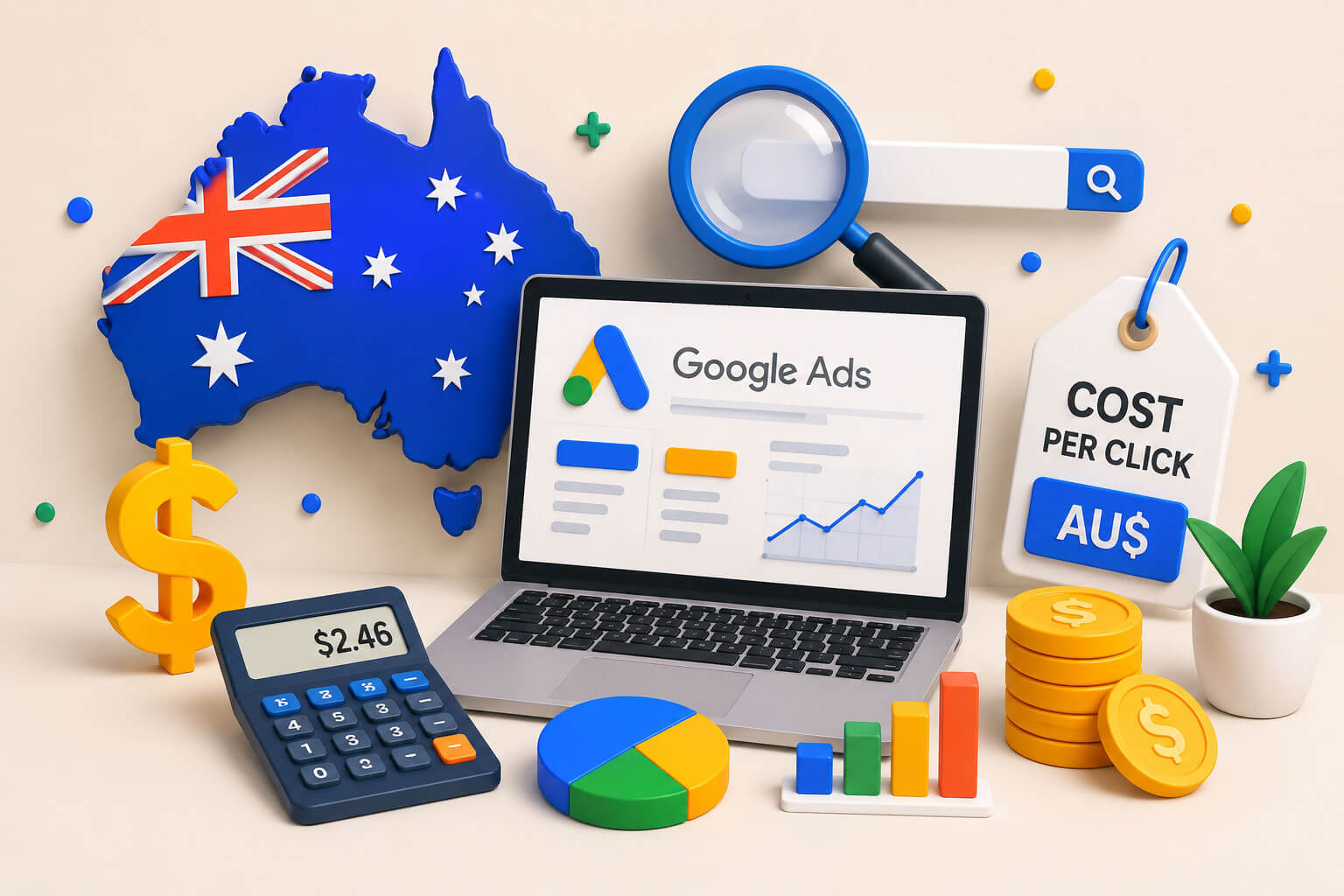
With Google Ads you pay per click. Across Australian search campaigns the average cost per click sits between $2 and $4 in 2026, though competitive fields like law and finance run far higher. A typical small business needs $1,000 to $2,500 a month in ad spend to get a fair test running, plus management if you bring in help. The day you pause the account, the leads stop.
SEO is an investment in an asset you own. Australian SEO retainers generally run $1,200 to $2,500 a month, with basic local campaigns starting around $450 to $600. You’re paying for content, technical fixes and links that keep working after the invoice is paid. Stop investing and your rankings don’t vanish overnight; they fade slowly. For a fuller breakdown of paid costs, see our guide on Google Ads costs in Australia.
Timelines: instant clicks vs slow compounding
This is the difference that matters most, and it’s the one businesses underestimate.
Google Ads can drive clicks on day one. Build a tight campaign in the morning and you can have enquiries by the afternoon. The catch is that the account spends its first few weeks learning, so give it about three months before you judge the real return.
SEO is a slow build. Most Australian businesses see meaningful movement in 4 to 6 months, and competitive keywords can take 12 months or more. The payoff is compounding: a page that reaches the first page of Google keeps drawing clicks month after month at no extra cost per visit. We cover the full timeline in our article on how long SEO takes to work.
SEO vs Google Ads at a glance
Here’s how the two stack up on the factors that decide most budgets:
| Factor | SEO | Google Ads |
|---|---|---|
| Speed to first leads | 3–6 months | Same day |
| Typical monthly cost | $1,200–$2,500 | $1,000–$2,500 ad spend + management |
| Cost per lead over time | Falls as rankings build | Stays roughly flat |
| Traffic when you stop paying | Fades slowly | Stops immediately |
| Best for | Long-term growth, trust | Launches, promotions, fast leads |
| Control over timing | Low | High |
Neither column is the winner. The right choice depends on how fast you need leads and how long you can wait for a return.
Where AI Overviews change the maths in 2026
You can’t compare these two channels in 2026 without talking about Google’s AI Overviews, the AI-generated answers that now sit at the top of many results.
By early 2026, AI Overviews appeared on roughly 48% of all searches, and in Australia they’ve shown up on close to 39% of queries. When one appears, it pushes the classic blue links further down the page. Studies have found organic click-through rates falling sharply on those queries, with some sites reporting traffic drops of 20 to 60%. That’s reshaped SEO: ranking first isn’t enough any more; you also want to be the source the AI quotes, because cited sources still earn clicks.
What does this mean for the SEO vs Google Ads decision? Two things. First, SEO now demands better, more authoritative content than it did two years ago, so cheap, thin SEO is a waste of money. Second, with organic results squeezed lower, paid ads have become more valuable for fast visibility, which is part of why CPCs have risen 10 to 25% in many industries. Both channels still work; they just both need to be done properly.
When Google Ads is the better call
Paid search is the smarter first move when speed and control matter most.
Reach for Google Ads if you’re launching a new business or product and need leads now, running a time-limited promotion, opening in a new suburb, or testing whether there’s real demand for a service before you commit to months of SEO. It’s also the better fit when your margins comfortably cover the cost per lead, for example a tradie whose average job runs into the thousands. You can switch it on Monday, see results by Friday and turn the tap up or down at will. Our Gold Coast Google Ads team can map a realistic projection for your industry before you spend a cent.
When SEO is the smarter investment
Organic search wins when you’re playing the long game and want your cost per lead to fall over time.
Lean towards SEO if you’re an established business that can wait a few months for compounding returns, you operate in a field where people research before they buy, or you simply can’t sustain paying for every single click forever. It builds something Google Ads never will: trust. Plenty of shoppers skip the ads and click the first organic result because it feels more credible. SEO also supports everything else you do online, which is why it pairs naturally with strong web design Gold Coast work and a fast, well-structured site. To get the technical foundations right, it’s worth following Google Search Central guidance.
Why most businesses should run both
Treating this as an either/or is the most expensive mistake of all, because the two channels make each other stronger.
Run them together and Google Ads delivers leads while your SEO is still maturing, so you’re not waiting six months with no return. Meanwhile your ad campaigns hand you real data on which keywords actually convert, and you feed those proven terms straight into your SEO plan. You also get to own more of the page: an ad at the top and an organic listing below means a searcher sees your name twice, which lifts clicks to both. As your rankings climb, you can ease back on paid spend for the keywords you now win organically and redirect that budget to terms you don’t. Our SEO services are built to work alongside paid campaigns rather than compete with them.
A real-world example
Take a Gold Coast physiotherapy clinic opening its doors. On day one it has no rankings, so SEO alone would mean months of silence. Instead it starts with $1,500 a month in Google Ads targeting “physio near me” and “sports injury treatment” across its local suburbs, and books patients from the first week.
At the same time it invests $1,200 a month in SEO: location pages, helpful articles on common injuries, and a faster site. By month five those pages start ranking, organic enquiries climb, and the clinic trims its ad budget on the keywords it now owns. A year in, half its enquiries come from organic search at no per-click cost, and the ad budget is focused only on competitive terms it doesn’t yet rank for. Run separately, either channel would have left money on the table. Run together, they covered the gap.
The bottom line
For Australian small businesses in 2026, SEO vs Google Ads comes down to time and budget. If you need leads this week, start with Google Ads. If you’re building for the long haul and want your cost per lead to drop, invest in SEO. Most businesses are best served by doing both: ads for momentum now, SEO for an asset that keeps paying later. The winners aren’t the ones who pick a side, they’re the ones who use each channel for what it does best. If you’d like help working out the right split for your budget and industry, the team at Creative Ground is happy to map it out with you.
Frequently Asked Questions
Is SEO or Google Ads better for a small business?
Neither is universally better; they suit different needs. Google Ads is better when you need leads fast or run short promotions, because it delivers traffic the same day. SEO is better for long-term growth, as it builds rankings that keep working without a per-click cost. Many Australian small businesses get the best return by running both together.
Is SEO cheaper than Google Ads?
SEO is usually cheaper over the long term, while Google Ads costs less to start. SEO retainers in Australia run about $1,200 to $2,500 a month and the cost per lead falls as rankings build. Google Ads needs $1,000 to $2,500 a month in ongoing ad spend, and that cost never drops because you pay for every click.
Does SEO still work in 2026 with AI Overviews?
Yes, but it has changed. AI Overviews now appear on around 48% of searches and have cut organic clicks on those queries, so ranking first alone is no longer enough. The goal in 2026 is to publish authoritative content that AI Overviews cite as a source, since cited pages still earn clicks. Thin, low-quality SEO no longer delivers.
Can you do SEO and Google Ads at the same time?
Yes, and most successful businesses do. Google Ads brings in leads while your SEO is still maturing, and your ad data reveals which keywords convert so you can target them organically. Appearing in both the ads and the organic results also means a searcher sees your business twice, which lifts total clicks to your site.
How long before SEO catches up to Google Ads?
Most Australian businesses see SEO deliver meaningful traffic in 4 to 6 months, with competitive keywords taking 12 months or more. Google Ads, by contrast, drives clicks immediately. Many businesses run ads for the first six months to cover the gap, then scale back as their organic rankings start producing leads on their own.
Which has a better ROI, SEO or Google Ads?
Over time SEO often delivers a higher return because its cost per lead falls as rankings compound, while Google Ads keeps charging for every click. In the short term Google Ads can show ROI faster since it generates leads on day one. The best long-term ROI usually comes from running both and shifting budget as rankings improve.